

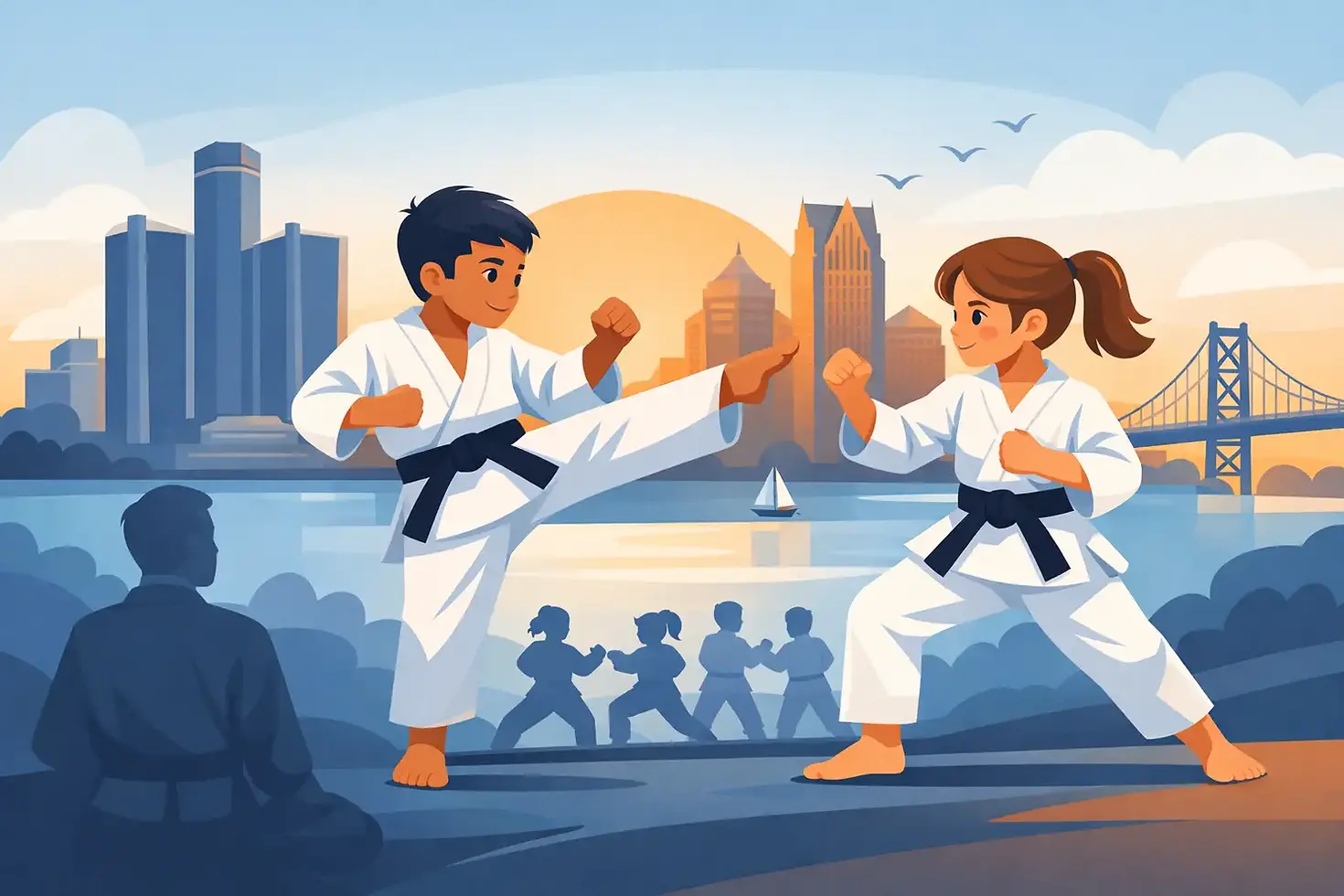
10 Top Reasons Kids Need Karate in Detroit

A child who struggles to sit still at school, backs away from new challenges, or spends every afternoon on a screen does not need more lectures. They need a place where effort has a purpose. The top reasons kids need karate come down to practical growth: stronger habits, better body control, real confidence, and a disciplined outlet for energy.
For Metro Detroit families, karate can be much more than an after-school activity. A well-run kids program gives children clear standards, age-appropriate instruction, and a team environment where progress is earned. The right class does not promise to turn every child into a fighter. It helps them become more prepared, respectful, and confident in everyday life.
Top Reasons Kids Need Karate: Growth That Carries Over
1. Karate gives kids structure
Children do better when expectations are clear. Karate class has a beginning, a warm-up, instruction, practice, and a finish. Students learn where to stand, when to listen, how to take turns, and why rules matter.
That structure can be especially valuable for kids who have a hard time transitioning between activities or staying on task. They are not just told to focus. They practice focusing while learning a stance, a block, or a sequence of movements. Over time, many parents see that routine show up at home and at school.
2. It builds confidence through earned progress
Real confidence is not loudness. It is the feeling a child gets after doing something difficult, practicing it, and realizing they can improve.
Karate gives kids regular proof that effort works. A child may begin unsure of how to move, hesitant to speak up, or worried about making mistakes. With patient coaching and repetition, they improve their technique, learn new skills, and work toward the next rank. That progress is visible. They know they earned it.
3. Kids learn respect without being talked down to
Respect is a major part of martial arts training, but it should never mean humiliation or fear. In a quality kids karate class, respect means listening to instructors, treating training partners properly, following safety rules, and taking responsibility for your actions.
Children also learn to respect themselves. They learn that quitting when something is hard is different from asking for help. They learn that a smaller or quieter student deserves the same consideration as anyone else in the room. Those are lessons that matter in classrooms, neighborhoods, and families.
4. Karate turns energy into disciplined movement
Kids are built to move. When they do not have a constructive outlet, that energy can come out as restlessness, rough play, or trouble staying settled. Karate offers a controlled way to work hard.
Classes develop balance, coordination, flexibility, agility, and general conditioning. Students kick, block, move through drills, and learn how to control their bodies under instruction. For children who do not connect with traditional team sports, karate can be a strong alternative because progress is personal while training still happens in a group.
Practical Benefits of Karate for Kids
5. It improves focus and listening skills
A karate student has to pay attention to details. Which foot moves first? Where should their hands be? When should they stop? Those small instructions require active listening.
The benefit is not instant, and it depends on the child and the consistency of attendance. But regular practice can help kids get used to hearing directions, processing them, and following through. That is a useful skill whether they are working on homework, playing another sport, or learning a new responsibility at home.
6. Karate teaches kids how to handle setbacks
Every student gets corrected. Every student has a move that feels awkward at first. Every student eventually meets someone in class who learns a skill faster. That is not a problem. It is part of the training.
In karate, children learn that correction is coaching, not failure. They can reset, try again, and improve one repetition at a time. This creates resilience without empty praise. A child begins to understand that being challenged is not the same as being defeated.
7. It supports personal safety and better judgment
Parents want their children to be safe, but smart self-protection is more than teaching a child to throw a strike. Good martial arts instruction emphasizes awareness, boundaries, avoiding trouble when possible, and getting help from trusted adults.
Physical techniques are taught with control and supervision. The goal is not to encourage aggression. The goal is to help children feel less helpless while understanding that the best outcome is usually to avoid danger, create space, and get to safety. That message is especially valuable as kids gain independence in school, sports, and their communities.
8. It gives children a healthier relationship with competition
Not every child wants to compete, and they should not be pushed into it. Kids karate can be a non-competitive training path where students work on fitness, discipline, confidence, and skill development at their own pace.
At the same time, karate teaches children how to measure themselves honestly. They learn to show up prepared, keep working when something is difficult, and recognize improvement. For kids who later want competitive martial arts or other sports, that foundation can be valuable. For kids who do not, the personal standards still matter.
9. Karate can help kids connect with positive role models
A coach has influence. Children notice whether an instructor is prepared, fair, patient, and consistent. In a serious training environment, they also see older students working hard, helping beginners, and being held to the same standards.
That matters in a community setting. Since 1972, Cooper’s Gym has served Detroit-area families with structured martial arts and combat sports training for different ages and skill levels. A strong program gives kids access to instructors who demand effort while making room for beginners to learn.
10. It gives kids a place to belong
Children need more than activities on a calendar. They need places where they are recognized, challenged, and encouraged to improve. A karate class can become that place, particularly for a child who has not found their fit in school teams or other group programs.
The community benefit works best when the class is welcoming but not soft on standards. Kids should feel safe asking questions and making mistakes, while also understanding that effort, respect, and attendance count. That balance helps them take ownership of their progress.
Choosing a Karate Program That Fits Your Child
Not every karate program is the same, and the best choice depends on your child’s age, temperament, goals, and schedule. A high-energy child may need a class that puts strong emphasis on control and listening. A shy child may benefit from a patient beginner group that builds participation gradually. A child interested in competition needs a different path than one whose family wants confidence, fitness, and self-defense awareness.
Look for organized instruction, clear safety standards, age-appropriate classes, and coaches who correct students without tearing them down. Ask how beginners are introduced, whether the program separates children by age or skill when needed, and what the school teaches about using martial arts outside the gym. The answer should always include restraint and responsibility.
Consistency matters more than starting fast. One or two classes will not change every habit, but regular training can give a child a reliable routine and a place to practice the qualities parents want to see grow. Let your child try the work, listen to the instruction, and find out what they can build one class at a time.


Comments