

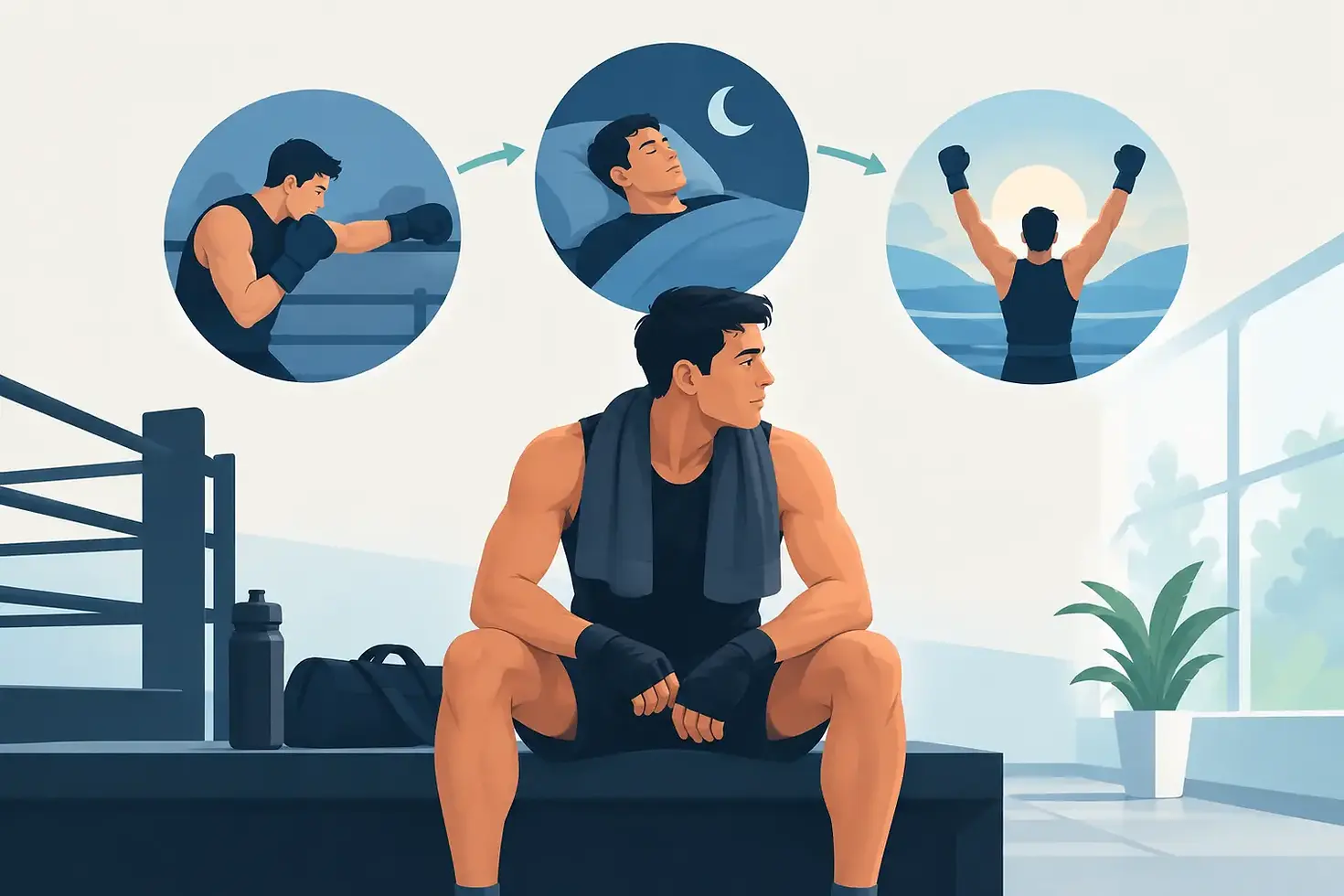
Fight Sport Recovery: Train Hard, Return Ready

A hard sparring round can leave your legs flat, your shoulders heavy, and your timing a half-step behind. That is not weakness. It is the bill for hard work. Fight sport recovery is how boxers, kickboxers, Muay Thai athletes, MMA fighters, and serious fitness clients pay that bill without losing the next week of training.
The goal is not to avoid soreness at all costs. Training creates fatigue, and fatigue is part of getting stronger, sharper, and better conditioned. The job is to manage it well enough that your body adapts instead of breaking down. A fighter who can train consistently with quality will usually improve faster than one who goes all-out, gets hurt, and disappears for two weeks.
Fight Sport Recovery Starts When Training Ends
Recovery is not something you begin the next morning after a tough session. It starts as soon as the last round ends. Bring your heart rate down gradually, walk for a few minutes, and loosen up with easy movement. Do not force deep stretches on a cold, exhausted muscle. The purpose is to transition out of hard work, not turn the cooldown into another workout.
Rehydrate before you leave the gym. If you sweat heavily, especially in a warm room or during a demanding conditioning session, plain water may not be enough. A drink with electrolytes can help replace sodium lost through sweat. The right amount depends on body size, heat, session length, and how much you sweat. A fighter cutting weight has different needs than someone training for fitness, so do not copy another athlete's routine blindly.
Eat a real meal within a few hours. Protein supports muscle repair, while carbohydrates restore the energy used during pads, bag work, drilling, wrestling, and sparring. Chicken and rice, eggs with potatoes, yogurt and fruit, beans with a grain, or a sandwich with lean protein can all do the job. Recovery nutrition does not need to be expensive or complicated. It needs to happen consistently.
Do Not Confuse Being Sore With Being Productive
Soreness is common after new work, heavy body shots, hard clinch rounds, or a tough strength session. But soreness is not a scorecard. If you need to prove you trained hard by barely being able to walk, your training plan may be working against you.
Sharp pain, joint swelling, numbness, dizziness, headaches, unusual weakness, or pain that changes your movement are different from normal soreness. Stop trying to tough out warning signs. Tell your coach, get evaluated by a qualified medical professional when needed, and protect your ability to train long term. This matters even more after head contact. A possible concussion is not a problem to solve with more roadwork or willpower.
Sleep Is a Fighter's Cheapest Advantage
You can own every recovery tool on the market and still fall behind if you sleep five hours a night. Sleep is where much of the repair work happens. It affects reaction time, mood, decision-making, appetite, coordination, and the ability to learn technique. Those are all fight skills.
Most hard-training adults should aim for seven to nine hours, with teenagers often needing more. That is not always easy for Detroit athletes balancing work, school, family, and training. Start with what you can control: keep a regular bedtime, dim screens before bed, make the room cool and dark, and avoid loading up on caffeine late in the day.
If a late class makes immediate sleep difficult, give yourself a short wind-down period. Shower, eat a light recovery meal if needed, and get away from the phone for a few minutes. The goal is to bring the nervous system down. A fighter who leaves the gym still mentally sparring is not giving the body much chance to recover.
Match the Recovery Day to the Training Day
Not every day needs complete rest, and not every day should be hard. Smart fight sport recovery uses the right level of activity for the fatigue you carry.
After a hard sparring day, an easy walk, relaxed bike ride, mobility work, or light technical drilling may help you feel better than staying on the couch all day. Keep it easy enough that you could hold a normal conversation. This is not the time to turn recovery into hidden conditioning.
After a demanding strength workout, you may be ready for skill work but not another max-effort lifting session. After a week of heavy bag work and kicking, your shins, hips, shoulders, and hands may need lower-impact training. Technical shadowboxing, footwork, defense drills, or controlled partner work can keep you progressing while reducing the pounding.
Competitive fighters have to plan around their camp. The closer the bout gets, the more valuable quality, speed, timing, and fresh legs become. Beginners need the same principle in a simpler form. You do not need to earn your place in class by going hard every single round. Learn the technique, build your base, and give your body time to catch up.
A Simple Weekly Check-In
Before training, ask yourself a few honest questions. Did you sleep well? Is your resting soreness improving or getting worse? Are your hands, shins, knees, neck, or back limiting your movement? Are you unusually irritable, unmotivated, or slow to react?
One rough day does not mean you should skip training. A pattern of rough days means something needs to change. That may mean an extra rest day, lighter sparring, more food, better sleep, less weight-cut stress, or a conversation with your coach. Serious athletes pay attention early, before a small problem becomes lost training time.
Recovery Tools Help, but Basics Do the Heavy Lifting
Ice baths, massage guns, compression boots, saunas, and cold plunges can feel good. Some athletes use them successfully, especially after tournaments or unusually hard sessions. But none of them can replace sleep, enough food, hydration, and sensible training volume.
Use tools for what they are: support. A massage gun may temporarily ease tight muscles. A sauna may help you relax, but it can also dehydrate you if you do not replace fluids. Cold exposure may reduce soreness for some people, but using it immediately after every strength workout may not fit every muscle-building goal. Context matters.
Mobility work is often more useful than people make it. Spend a few controlled minutes on the areas your sport loads repeatedly: ankles, hips, thoracic spine, shoulders, wrists, and neck. Move through comfortable ranges. Do not chase painful flexibility because someone online promised it would make you kick higher or punch harder overnight.
Fueling Depends on Your Goal
A fighter preparing for competition may need a detailed nutrition plan. Someone taking boxing for weight loss needs a plan that supports training without making them miserable. A teenager growing, training, and attending school needs enough food to recover, not an extreme diet copied from a professional athlete.
The common ground is simple: eat enough protein, include carbohydrates around hard training, get fruits and vegetables regularly, and do not let dehydration become normal. If body weight needs to change, do it gradually whenever possible and under appropriate coaching or medical guidance. Fast weight cuts can create serious health and performance problems, especially when athletes try to handle them alone.
At Cooper's Gym, training can mean anything from building confidence in a beginner boxing class to preparing for serious competition. Recovery should match that purpose. A person training twice a week for fitness does not need the same recovery plan as an athlete sparring, lifting, running, and preparing to make weight. Both need consistency, coaching, and respect for what their bodies are telling them.
Return to Hard Training With a Reason
The right time to push again is when your movement is normal, your energy is back, and you can perform the session with good form and attention. You may still have mild soreness. That is normal. What you should not have is pain that makes you compensate, fatigue that destroys your defense, or a foggy head that affects judgment.
Recovery is not soft. It is disciplined. It is drinking water when you would rather grab nothing, getting to bed when you would rather scroll, eating enough when your schedule is packed, and taking a lighter day before your body forces a longer break. Train hard, listen closely, and come back ready to do quality work.


Comments