

Martial Arts for Teens That Build Real Skills

Some teens need an outlet more than another lecture. They have energy, stress, pressure from school, too much screen time, or a confidence problem they do not always talk about. Martial arts for teens works because it gives them something real to do with all of that - structure, challenge, accountability, and progress they can feel week by week.
Not every teen needs the same kind of training, and that matters. Some want fitness. Some need discipline. Some want to learn how to protect themselves. Others are serious about competition and want coaching that pushes them. A strong program knows the difference and does not throw everybody into the same class with the same expectations.
Why martial arts for teens works
Teen years can go in a lot of directions fast. Good training gives that time and energy a purpose. It teaches young people how to show up, listen, work hard, and keep going when something feels uncomfortable.
That does not mean every class needs to be harsh or military-style. The best programs are structured and demanding, but they also know how to meet teens where they are. A beginner who has never thrown a punch needs coaching, patience, and clear instruction. A teen athlete who wants to compete needs technical development, conditioning, and a coach who will not waste time.
Martial arts also gives teens measurable progress. They move better. Their stamina improves. Their posture changes. They learn how to stay calm under pressure. That kind of progress carries over into school, social situations, and home life. Parents notice it. Teens feel it.
The biggest benefits go beyond fitness
A lot of parents start by looking for exercise, and that is a good reason. Martial arts training helps teens build conditioning, coordination, balance, speed, and strength. It can also be a better fit than traditional team sports for teens who want individual progress without the politics that sometimes come with school athletics.
But the bigger value is often mental. Teens who train consistently usually improve their focus and self-control. They learn how to take correction without shutting down. They learn that confidence is earned through repetition, not talk. For teens who are shy, anxious, or unsure of themselves, that can be a major shift.
Self-defense is another practical reason families look at training. That said, real self-defense is not just learning how to hit. It includes awareness, distance management, discipline, and knowing when not to escalate. A good program teaches control first. The goal is not reckless aggression. The goal is calm, capable decision-making under pressure.
Choosing the right style for a teen
This is where families sometimes get stuck. They know they want martial arts, but they are not sure which discipline makes sense. The answer depends on the teen’s goals, personality, and comfort level.
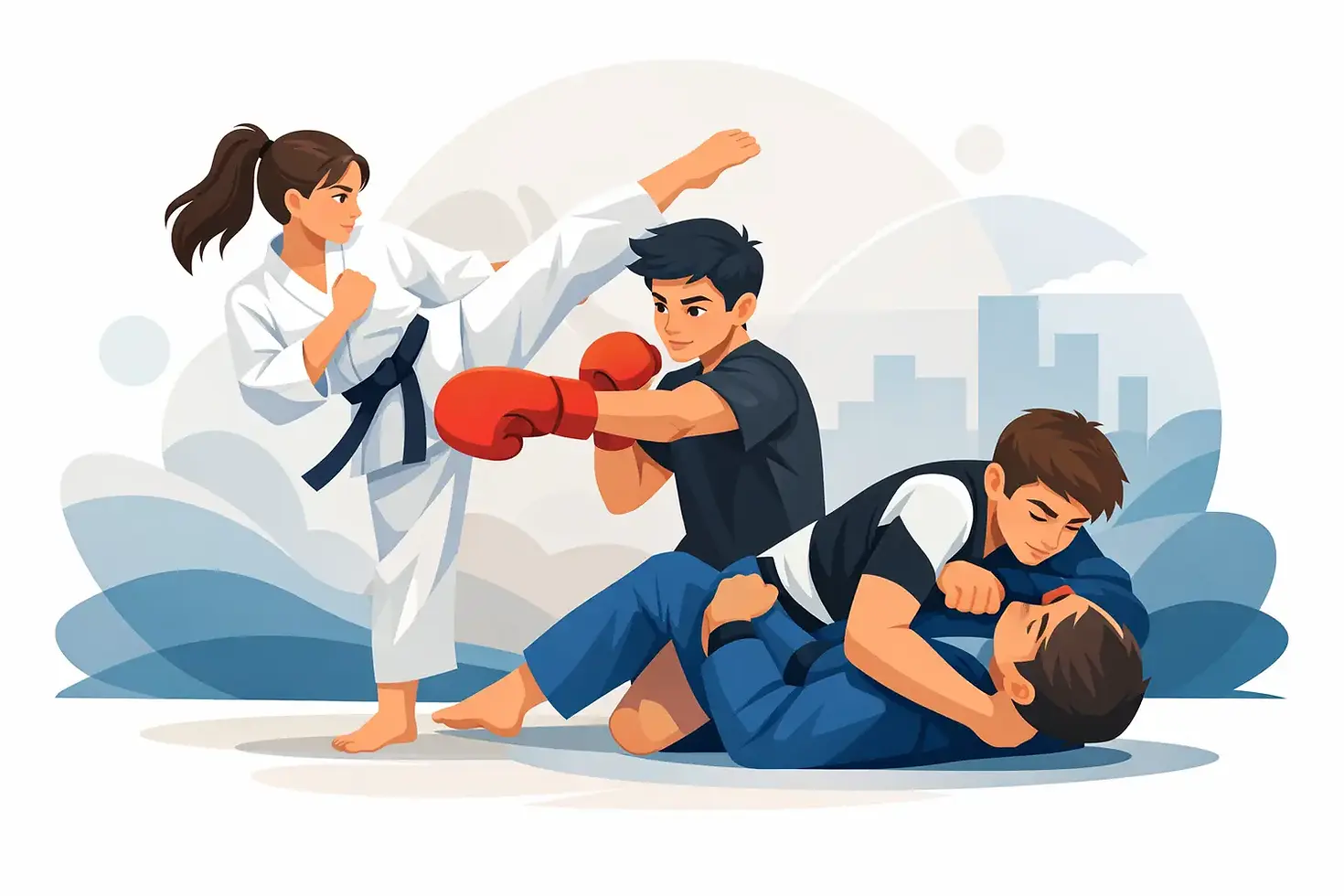
Boxing is excellent for footwork, timing, conditioning, coordination, and discipline. It is direct, demanding, and easy to understand at the beginner level while still offering serious technical depth for advanced students. Kickboxing and Muay Thai add knees, kicks, and more weapons, which some teens enjoy because the training feels varied and dynamic.
MMA can be a strong fit for teens who want a broader combat sports experience, but it works best in a gym with real structure and coaching, not a chaotic class where beginners get overwhelmed. Traditional martial arts programs can also be valuable, especially when they emphasize discipline, respect, and age-appropriate skill development.
There is no single best choice for every teen. A quiet teen who needs confidence may do great in boxing. A high-energy athlete may thrive in kickboxing or Muay Thai. A teen interested in practical self-defense might benefit from a program that includes defensive tactics along with striking fundamentals. The important part is not chasing trends. It is finding a program that teaches well.
What a serious teen program should include
A real teen program should feel organized from the start. That means clear instruction, level-appropriate training, and coaches who know when to push and when to correct. Teens need standards, but they also need a path they can follow.
Look for a gym that separates beginners from more advanced students when needed. That helps prevent frustration and keeps the training safer and more productive. A first-time student should not be expected to keep up with experienced competitors on day one.
Good coaching also matters more than flashy marketing. Strong coaches teach stance, balance, movement, defense, and control before they worry about showing off combinations. They keep the room focused. They hold teens accountable. They create an environment where effort is expected and respect is non-negotiable.
Safety should be built into the training, not treated like an afterthought. That includes proper supervision, technical instruction, controlled contact, and realistic expectations for each age and skill level. Hard training is good. Sloppy training is not.
What parents should watch for
Parents do not need to be martial arts experts to recognize a quality program. Start with the atmosphere. Is the gym disciplined without being hostile? Are the coaches attentive? Do students look engaged and organized, or confused and left on their own?
Watch how instructors talk to teens. Good coaches are firm, but they are not careless with their words. They know how to correct behavior and technique without tearing a student down. That balance matters, especially for teenagers who are still building confidence.
It also helps to ask how the program handles different goals. Some teens want fitness and confidence. Some want competition. Some are just trying something new. A strong gym has room for all of that, but it should not pretend those paths are identical. Different goals need different training plans.
If a gym cannot explain how it develops beginners, that is a red flag. If every answer sounds like a sales pitch with no detail, keep looking. Families should know what the training is for and how progress happens.
Martial arts for teens in Detroit families can trust
In a city like Detroit, families want more than a trendy fitness class. They want serious instruction, practical value, and a place where teens are expected to work. They also want a program that feels accessible, especially in communities where families come from different backgrounds and speak different languages.
That community piece matters. Teens train better when they feel like they belong somewhere that still holds them to a standard. A neighborhood-based gym with experienced coaches and structured programs can make a real difference, especially when it serves beginners, fitness students, and competitive athletes without mixing everything together.
At Cooper’s Gym, that approach has been part of the work for decades. Since 1972, the focus has been on real instruction, level-specific training, and programs that meet people where they are - whether they want fitness, discipline, self-defense, or serious fight development.
When training is not the right fit
Martial arts is a strong option for many teens, but it is not magic. Some teens resist structure at first. Some need time to adjust to group training. Others may try one style and realize a different discipline fits better.
That is normal. The answer is not to force a bad fit and hope it changes overnight. Sometimes a teen needs a different class environment, a different coaching style, or simply more time to settle in. Progress is not always immediate, especially for beginners who are dealing with nerves, low confidence, or inconsistent motivation.
The key is consistency. A teen does not need to be perfect to benefit from training. They need to keep showing up. Over time, the routine starts doing its job. Skills sharpen. Conditioning improves. Confidence becomes less of an idea and more of a habit.
The long-term value of starting young
When teens learn how to train properly, they carry that standard with them. They learn how to work through frustration, take responsibility, and stay composed under pressure. Those are not small things. They matter in sports, school, jobs, and everyday life.
For some teens, martial arts becomes a lifelong discipline. For others, it is a season that helps them get stronger, more focused, and more confident when they need it most. Either way, the right training gives them something solid to stand on.
If a teen in your family needs direction, confidence, conditioning, or practical self-defense skills, martial arts is worth taking seriously. The right gym will not just keep them busy. It will teach them how to carry themselves with discipline when it counts.


Comments