

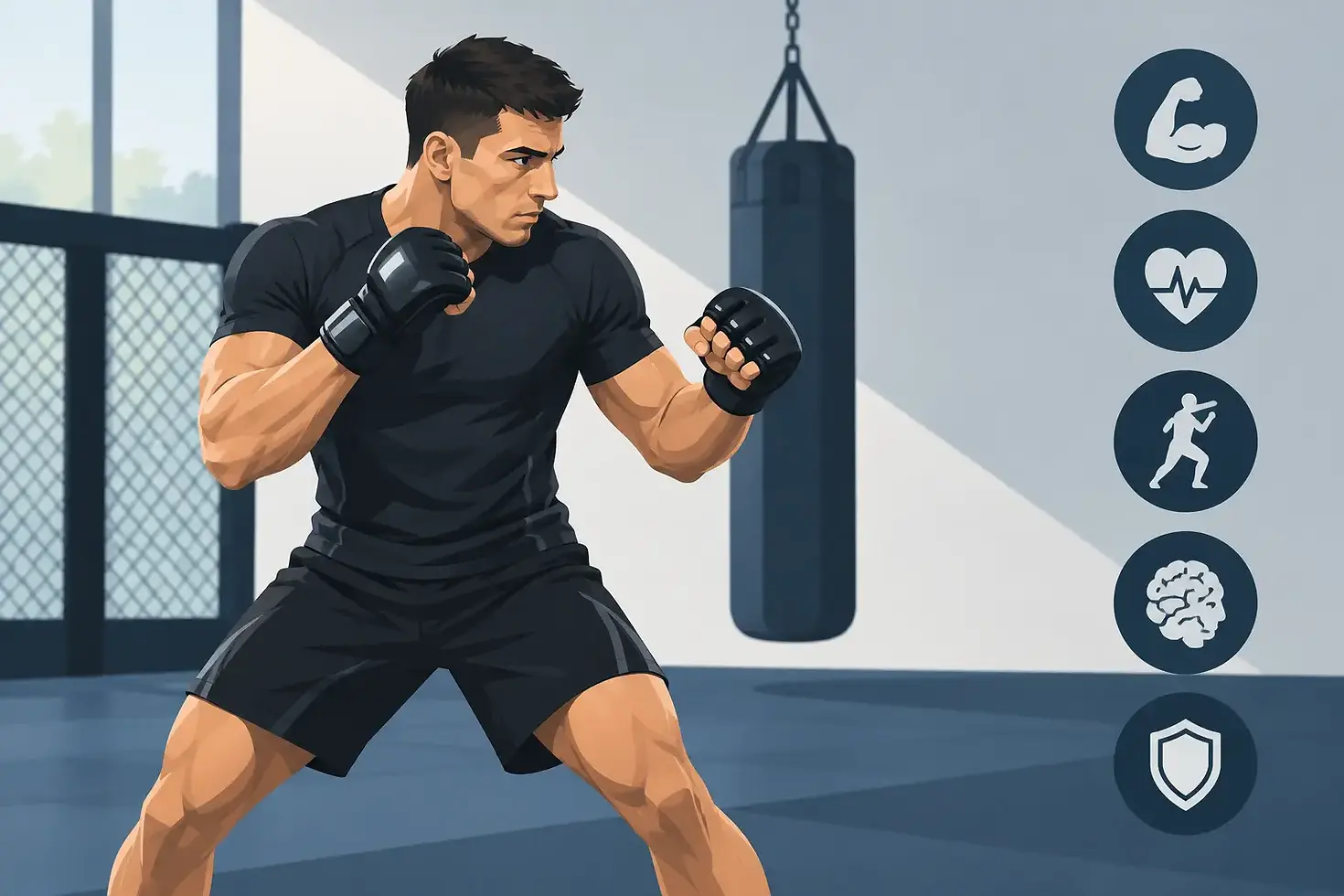
MMA Training Benefits That Build Real Strength

Most workouts ask you to push through a set, watch the clock, and go home. MMA asks more of you. You have to move with purpose, stay calm when you are tired, learn how to protect yourself, and keep showing up when a technique does not come easily. That is where the real MMA training benefits begin. It is demanding training, but it gives people across Metro Detroit practical results that carry into work, school, family life, and competition.
MMA combines striking, grappling, movement, conditioning, and disciplined decision-making. A beginner does not need to arrive in fighting shape or have previous martial arts experience. The right program builds the foundation first, then raises the level as your conditioning and skill improve.
MMA Training Benefits Go Far Beyond Calories
MMA is a full-body training method because your whole body has a job. Punches and kicks develop power and coordination. Clinch work challenges posture, balance, and grip strength. Takedown defense and ground movement demand hips, legs, core control, and the ability to keep working under pressure.
That does not mean every class has to feel like a fight camp. A well-run program adjusts the intensity to the student. Someone training for weight loss may focus on pads, bag work, movement drills, and controlled partner exercises. An amateur fighter may add harder rounds, tactical sparring, wrestling entries, and conditioning built for competition. The discipline is the same. The workload and contact level should fit the goal.
For people tired of random workouts, MMA provides a reason to train hard. You are not just doing burpees because somebody told you to do burpees. You are building the legs to move, the lungs to recover, and the technique to stay composed in the next round.
Better Conditioning That Has a Purpose
MMA develops several kinds of fitness at once. You build aerobic conditioning for longer rounds, short-burst power for combinations and takedown attempts, muscular endurance for repeated movement, and mobility for safer kicking, pivoting, and grappling positions.
The biggest change many students notice is work capacity. Walking up stairs, carrying groceries, playing with kids, or getting through a long shift can feel different when your body is used to sustained effort. Training also teaches pacing. If you explode at full speed for every second of a round, you burn out fast. Learning when to push and when to breathe is a physical skill and a mental one.
Weight loss can be part of the result, especially when training is paired with steady nutrition and sleep habits. But no gym should promise that a few classes will erase years of inconsistent habits. Progress is earned through regular attendance, sound coaching, and a plan you can keep following.
Coordination Makes You More Capable
MMA requires the body and mind to work together. You learn to stand balanced while throwing combinations, react to an opponent's movement, control distance, defend without panicking, and transition between positions.
That coordination is useful for every age group. Teens often gain better body awareness and discipline. Adults who have spent years behind a desk may rediscover balance, mobility, and athletic confidence. Competitive athletes learn to make cleaner decisions when the pace rises.
Confidence Built Through Repetition
Real confidence is not loud. It comes from knowing you can handle a difficult task because you have practiced it before. In MMA, that may mean learning how to hold pads correctly, completing a hard round without quitting, escaping a controlled position, or speaking up when you need help understanding a drill.
Beginners sometimes worry that everyone in a martial arts gym will be tougher, younger, or more experienced. Good instruction removes that barrier. The room should challenge you without making you feel like a target. Training partners should help you learn, while coaches make sure skill, size, and intensity are matched responsibly.
Over time, students tend to stand differently. They become more comfortable taking up space, asking questions, and staying calm when something gets uncomfortable. That shift matters for women, men, teenagers, and anyone rebuilding self-esteem after a rough period.
Practical Self-Defense Awareness
MMA can improve self-defense ability, but responsible training starts with a clear truth: the best self-defense situation is the one you avoid. Awareness, distance, verbal boundaries, and getting away safely matter more than winning an exchange.
Still, physical training has value. Students learn balance, defensive posture, how to manage range, how to move after contact, and how to keep thinking when their heart rate climbs. Those are more useful than movie-style techniques practiced once in a while.
It also depends on the program. Sport MMA has rules, gloves, referees, and a controlled environment. Real-life self-defense can involve concrete, multiple people, weapons, and no fair play. That is why self-defense instruction should address avoidance and escape, not sell false guarantees. Train seriously, use good judgment, and understand the limits of any technique.
Discipline That Shows Up Outside the Gym
Nobody becomes skilled in MMA by watching clips or buying equipment. Improvement comes from repetition. You show up, wrap your hands, practice the basics, make corrections, and return the next day ready to learn more.
That routine builds habits. Many students find that regular training gives structure to the rest of their week. They sleep better because they have worked hard. They make better food choices because they want energy for class. They manage stress more effectively because the gym gives them a place to put effort into something productive.
There is also humility in martial arts. Every person has a technique that needs work. Even experienced fighters return to stance, footwork, defense, and conditioning. That keeps the training honest. You earn progress one class at a time.
A Place for Beginners and Serious Fighters
MMA has room for people with very different goals, but their training should not look exactly the same. A parent looking for a challenging fitness program does not need the same schedule or contact level as a person preparing for an amateur bout. A teenager developing confidence needs patient instruction and clear boundaries. A seasoned athlete needs technical detail, hard rounds, and coaches who understand competition.
At Cooper's Gym, students can train in programs built around their level and purpose, from foundational fitness and self-defense work to serious combat-sports development. That matters because one-size-fits-all classes often leave beginners overwhelmed and advanced athletes undertrained.
The right starting point is simple: be honest about your goal. If you want conditioning, say so. If you want to compete, say so. If you are nervous about contact, say so. A good coach can help you build a training path that is challenging without being reckless.
Consistency Beats Going Too Hard Too Soon
New students often make one mistake: they treat the first week like a test of toughness. They train too hard, get overly sore, miss the next two weeks, and lose momentum. Tough training is valuable. Smart training is what keeps you progressing.
Start with a schedule you can maintain. Learn clean mechanics before adding speed. Use protective equipment when the class calls for it. Respect your training partners, listen to coaching, and take recovery seriously. Injuries can happen in any physical activity, but good preparation and controlled practice reduce unnecessary risk.
MMA training is not reserved for professional fighters or people who already look athletic. It is for the person who wants more energy, stronger habits, practical confidence, better conditioning, or a serious path into competition. Show up willing to work, give yourself time to learn, and let every round prove what consistent effort can build.


Comments