

Muay Thai Versus Kickboxing: Which Fits You?

The difference between Muay Thai versus kickboxing shows up fast once the pads come out. Both sports build conditioning, confidence, balance, and real striking skill. But they use different tools, fight at different ranges, and demand different habits from the athlete.
For a Detroit-area beginner looking to get in shape, either program can be a strong choice. For someone preparing to compete, choosing the right discipline matters even more. The best answer is not which style is tougher. Both are demanding. The question is what you want to learn, how you want to train, and what rules you may fight under.
Muay Thai Versus Kickboxing: The Main Difference
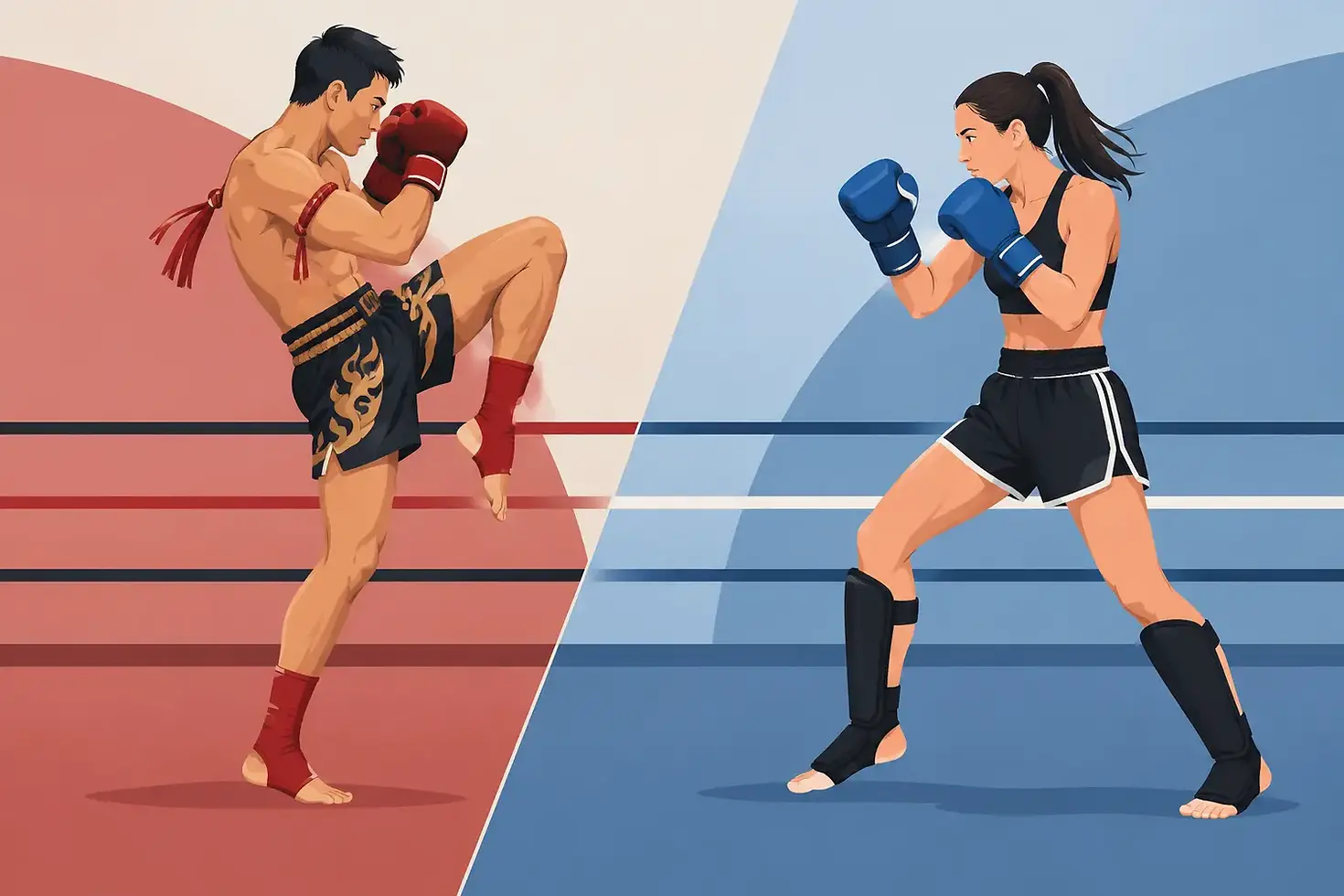
Traditional Muay Thai is often called the art of eight limbs. It uses punches, kicks, knees, and elbows. It also includes clinch fighting, where athletes control posture, work for position, and attack with knees or off-balancing techniques.
Kickboxing is a broad term. Depending on the gym and competition rules, kickboxing generally combines boxing punches with kicks. Many kickboxing programs focus heavily on fast combinations, footwork, defensive movement, and powerful kicks. Knees may be allowed under some rules. Elbows and extended clinch work are usually limited or not allowed.
That difference changes the rhythm of training. A Muay Thai athlete must be comfortable when the distance closes. A kickboxer often works to manage distance with movement, combinations, and clean entries and exits.
Neither approach is automatically better. A strong Muay Thai practitioner can be difficult to handle in close range. A skilled kickboxer can be sharp, mobile, and dangerous from the outside. Good coaching teaches athletes to understand the rules, then develop the right tools for those rules.
The Tools Each Style Uses
Muay Thai: Eight Points of Contact
Muay Thai gives students a wider striking menu. Punches and round kicks are central, but knees, elbows, and the clinch are not side material. They are part of the foundation. Training may include checking kicks with the shin, throwing knees from a controlled clinch, framing against an opponent, and learning to stay balanced while under pressure.
Elbows are especially important to understand, even when a student never plans to compete. They require control, awareness, and disciplined technique. In a class setting, safe drilling matters. Students should not be thrown into hard contact before they have learned position, range, and respect for their training partners.
The Muay Thai stance can be more upright than a boxing stance, helping athletes check kicks, defend knees, and stay ready for clinch exchanges. That does not mean every Muay Thai fighter looks the same. Style changes by coach, ruleset, body type, and experience level.
Kickboxing: Fast Combinations and Movement
Kickboxing puts a strong emphasis on connecting punches and kicks without losing position. A student may spend a round working a jab-cross-hook combination into a low kick, then practice moving off at an angle before returning with another attack.
The boxing side of kickboxing matters. Clean hands, head movement, guard recovery, and footwork can make the difference between throwing a combination and landing one. Kicks add another layer of distance and power. Common techniques include round kicks, front kicks, side kicks, and low kicks, depending on the program and rules.
Because prolonged clinching is usually restricted, kickboxers often learn to break away quickly after contact. The pace can feel fast and athletic. It is a strong fit for people who enjoy pad work, bag rounds, active movement, and combination-based training.
What Training Feels Like
A quality beginner class in either discipline should not feel like a brawl. It should feel organized. You learn stance, guard, footwork, basic attacks, defense, conditioning, and how to work safely with other people.
Muay Thai training often includes pad rounds, heavy bag work, shadowboxing, bodyweight conditioning, technical drills, and clinch practice. As students advance, they may add controlled sparring and more detailed work on timing, counters, and ring strategy. The clinch can be physically demanding because it tests posture, grip fighting, core strength, and composure when someone is trying to control your head and arms.
Kickboxing classes may use much of the same equipment, including gloves, wraps, bags, pads, and protective gear. The drills frequently move from simple combinations to defensive responses and counterattacks. You may work on punching into kicks, kicking after a defensive move, or maintaining distance against an aggressive opponent.
Hard training does not require reckless training. Beginners need time to build mechanics and conditioning. Competitive athletes need structured rounds, coach feedback, and training partners who understand control. That is how people stay in the sport long enough to get good.
Which Is Better for Fitness and Weight Loss?
Both Muay Thai and kickboxing are excellent for fitness because they ask your whole body to work. Punching and kicking rounds raise the heart rate. Footwork develops coordination. Pad work demands focus. Conditioning improves when training is consistent.
Kickboxing may appeal to adults who want high-energy striking workouts with a steady flow of combinations. It can be easier to understand at first because the rules of engagement are more familiar: use your hands and feet, maintain range, and keep moving.
Muay Thai may appeal to someone who wants a more complete striking system and does not mind close-contact drills as they progress. Knees, clinch work, and kick defense create a different kind of full-body challenge.
Weight loss depends on more than the style. Attendance, intensity, food choices, recovery, and sleep all matter. The best program is the one you can train in consistently. A person who enjoys kickboxing three times a week will usually see better results than a person who picks Muay Thai because it sounds tougher but rarely attends class.
Which Style Helps More With Self-Defense?
Both styles can improve practical self-defense qualities: distance awareness, balance, conditioning, confidence under pressure, and the ability to strike with control. They also teach an important lesson that many people overlook: avoid unnecessary fights whenever possible.
Muay Thai offers useful close-range tools, particularly knees, elbows, and clinch awareness. Kickboxing develops fast movement, strong punches, and the ability to strike while managing distance. Still, sport training is not the same as a complete self-defense plan.
Real self-defense also involves awareness, verbal de-escalation, escape, legal judgment, and knowing when to get help. A serious self-defense program should address those areas instead of pretending that a few hard rounds on a heavy bag solve every problem.
Competition Rules Change the Answer
If you want to compete, start by asking what event rules you expect to train for. Muay Thai bouts may allow elbows, knees, throws or sweeps within certain limits, and clinching. Kickboxing rules can vary widely. Some events permit low kicks, while others do not. Some allow knees, while others restrict them. Some use full contact rules, while others use lighter-contact formats.
This is why athletes should not train from random videos alone. A technique that scores under one ruleset can be illegal, risky, or tactically wrong under another. The coach must build the athlete around the competition they are entering.
At Cooper’s Gym, students can train in structured programs based on their goals, whether that means fitness, confidence, self-defense, or serious combat sports development. Beginners deserve instruction that meets them where they are. Fighters deserve technical coaching that prepares them for the ring.
How to Choose Between Muay Thai and Kickboxing
Choose Muay Thai if you are interested in knees, elbows, clinch work, and a broader close-range striking system. It is a strong choice for students who want to learn how to stay composed when the fight gets crowded.
Choose kickboxing if you like fast combinations, active footwork, boxing-based offense, and working at punching-and-kicking range. It is a strong choice for people who want a demanding workout and a sharp, movement-heavy striking style.
You also do not have to treat the choice as permanent. Training one style can improve the other. Kickboxing can sharpen a Muay Thai athlete’s hands and movement. Muay Thai can give a kickboxer better balance, kick defense, and confidence at close range. The key is to start with a clear purpose and train under instructors who value technique, safety, and steady progress.
Your first class should leave you challenged, not confused or beaten up. Pick the program that makes you want to come back, put the work in, and build real skill one round at a time.


Comments