

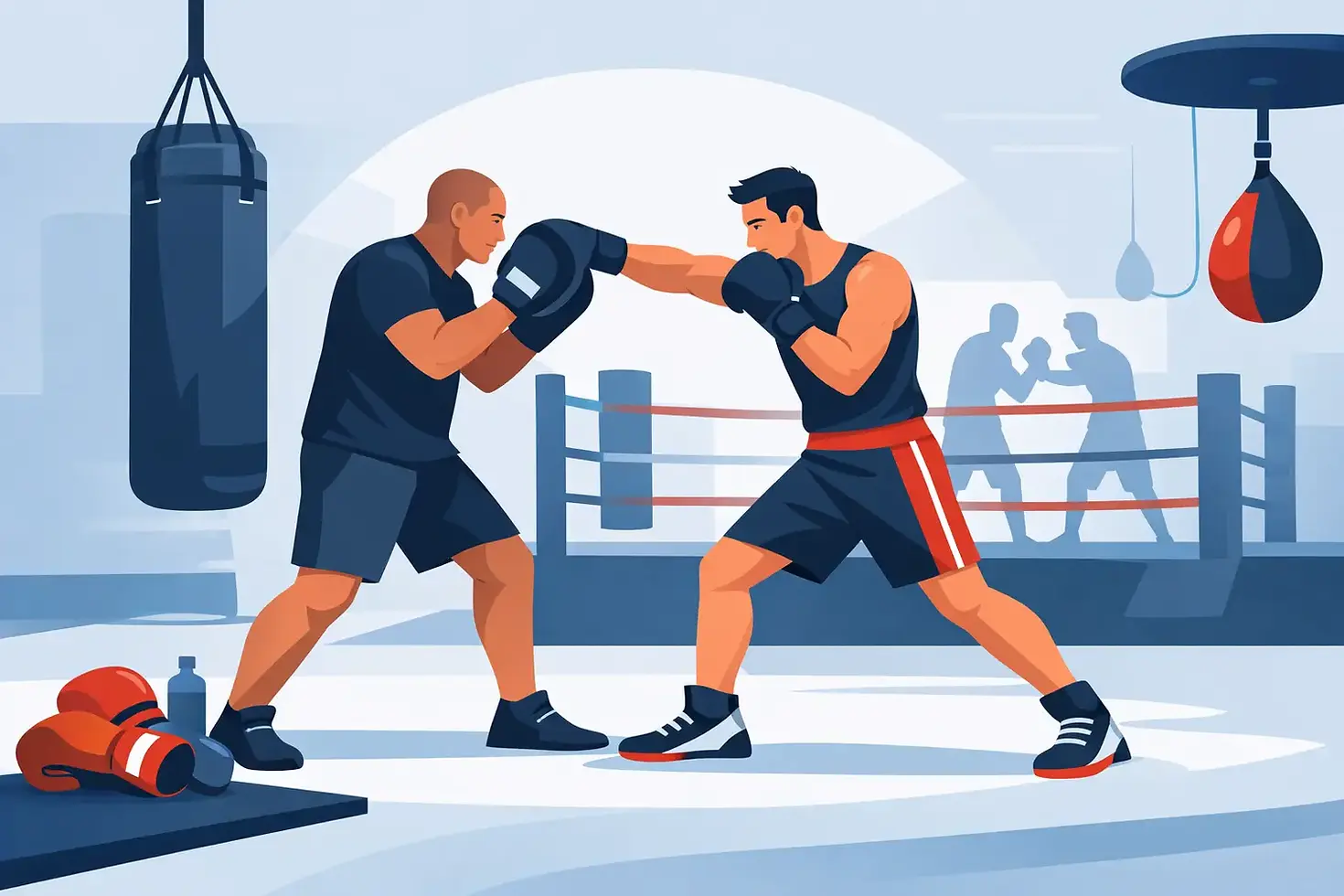
Professional Boxing Starts With Real Training

Most people see the lights, the trunks, and the walk to the ring. Professional boxing starts long before that. It starts with structure, discipline, and the kind of training that strips away excuses fast.
A lot of people use the term loosely. Hitting pads hard does not make someone a pro. Neither does sparring once in a while, posting clips online, or calling every hard workout a fight camp. Professional boxing is a serious level of the sport. It means competing for pay, training under real supervision, and building skills that hold up when the rounds get hard and the pressure rises.
What professional boxing really demands
At the professional level, talent helps, but discipline carries more weight. A strong jab, fast hands, or natural power can get attention early. What matters more is whether a fighter can train consistently, take coaching, make adjustments, manage conditioning, and stay sharp over time.
The biggest difference between amateur and professional boxing is not just the paycheck. It is the pace, the scoring, the round structure, and the way damage adds up. Pros need ring control, patience, defensive awareness, and the ability to create clean openings without wasting energy. A fighter who rushes, loads up, or depends only on toughness usually gets exposed.
That is why serious boxing instruction has to be built in stages. Footwork comes before flash. Defense comes before ego. Conditioning has to match the style of the fighter, not just the coach’s favorite workout.
Professional boxing is built on fundamentals
People love the highlight-reel knockout. Coaches know the real work is in the basics. A professional fighter needs balance, timing, distance control, hand positioning, head movement, and composure. None of that is optional.
A jab is not just a punch. It measures distance, breaks rhythm, sets traps, and keeps a fighter from getting backed up. Defense is not just slipping for show. It is blocking, rolling, parrying, stepping out, and staying in position to answer back. Conditioning is not just about being tired at the end of class. It is about being able to think clearly and punch correctly when fatigue hits.
The fighters who last are usually the ones who respect the boring parts of training. Roadwork, drilling, bag rounds, controlled sparring, recovery, and coach correction are what create consistency. At the pro level, consistency wins rounds.
The road from beginner to pro is not the same for everyone
Some people walk into a gym for weight loss or self-defense and end up loving boxing enough to compete. Others come in with amateur goals from day one. A smaller group has the talent, mindset, and commitment to push toward professional boxing. The key is honest evaluation.
Not every good gym member should become a fighter. Not every amateur should turn pro. That is not negativity. That is responsible coaching.
A proper fight program should separate fitness boxing from competitive training. Those are different tracks with different demands. A beginner who wants confidence, conditioning, and skill still deserves strong instruction. A serious competitor needs another level of structure, including technical development, sparring progression, corner guidance, and accountability outside the gym.
That separation matters. It protects beginners from being thrown into the wrong environment, and it gives fighters the attention they need to improve.
What to look for in a boxing gym
If your goal is professional boxing, the gym matters. A lot. You need coaches who understand development, not just workouts. You need a place that can teach fundamentals to beginners, sharpen amateurs, and prepare serious fighters without mixing everybody into one class and hoping for the best.
Look for a gym with a real track record, clear program structure, and coaches who correct details. Look for controlled sparring, not chaos. Look for a culture where discipline matters more than talk.
It also helps to train in a place that understands the community it serves. In a city like Detroit, boxing has always meant more than sport. It is discipline, confidence, opportunity, and a place to build yourself up. That is one reason a long-standing gym like Cooper’s Gym has stayed relevant for decades. People need real coaching, but they also need a place where beginners, amateurs, and serious fighters all have a lane.
Professional boxing and everyday life
Even for those who never turn pro, training the right way changes people. Boxing teaches composure under pressure. It builds work ethic, self-respect, and physical control. For teenagers, it can create discipline. For adults, it can sharpen focus and rebuild confidence. For competitors, it can become a career path.
Still, there are trade-offs. Professional boxing is demanding. It takes time, recovery, sacrifice, and a willingness to hear hard truths. Some people love boxing but do better in a non-competitive program. Others find out they want the full challenge. Good coaching helps people figure out which path fits.
Who should consider professional boxing
Professional boxing is for people who want serious structure and are ready to earn progress. That includes experienced amateurs looking to move up, athletes who respond well to discipline, and dedicated trainees who want more than a cardio workout.
It is not about trying to look tough. It is about showing up, learning, getting corrected, and staying with the process long enough to become dangerous for the right reasons. If that mindset fits, the next step is simple: train in a place that takes boxing seriously from day one.
Cooper's Boxing Gym 313-581-5085 313-581-8999


Comments