

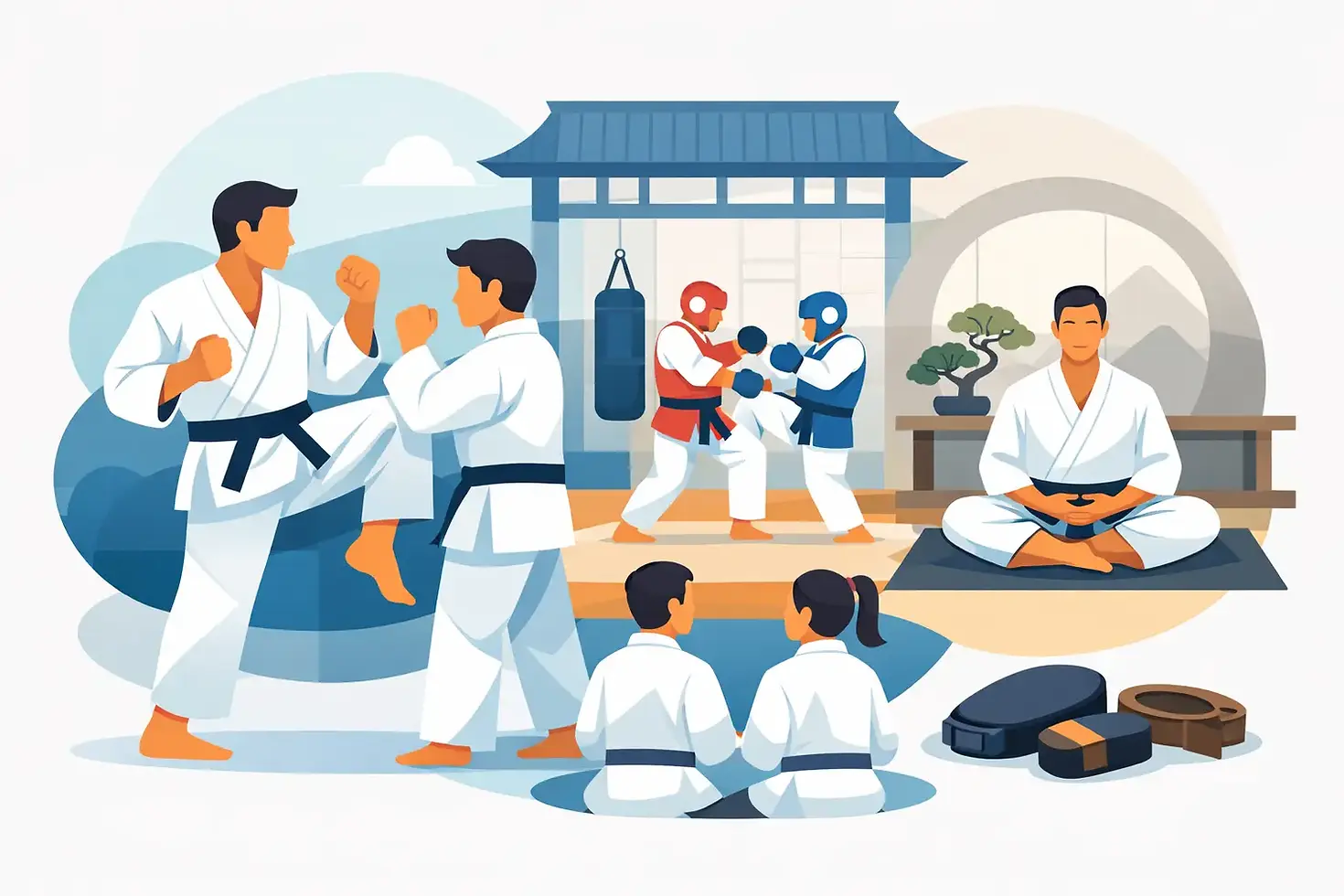
What an Institute of Martial Arts Should Offer

A lot of places call themselves an institute of martial arts. That sounds serious, but the name alone does not tell you much. If you are looking for real training in Metro Detroit, what matters is how the program is built, who it serves, and whether the instruction matches your goals from day one.
For some people, the goal is weight loss and conditioning. For others, it is self-defense, confidence, discipline, or serious competition. A good school knows those are not the same path. If everybody gets pushed through the same class, the program usually serves nobody especially well.
What makes an institute of martial arts credible
A credible program is structured. Beginners should not be thrown into advanced training and told to keep up. Kids should not be trained like adults. Fitness clients should not be handled like active fighters. The best programs separate people by age, experience, and purpose.
That structure matters because martial arts training is not just exercise. It is skill development under pressure. You are learning timing, footwork, defense, balance, control, and decision-making. If instruction is sloppy, students build bad habits fast. Those habits are hard to fix later.
A real training institute also has coaching depth. That means more than one style, more than one level, and more than one reason to train. Boxing, kickboxing, Muay Thai, MMA, Hapkido, defensive tactics, and self-defense all serve different needs. Some overlap. Some do not. The right place helps you train with purpose instead of guessing what class might fit.
Longevity matters too. Any gym can look sharp for six months. Staying consistent over decades is different. It means the program has worked for beginners, families, fitness clients, and competitive athletes over time. That kind of history usually shows up in better instruction, better discipline, and clearer expectations.
The best institute of martial arts is built for different goals
A lot of frustration in martial arts comes from mismatch. A person walks in wanting to get in shape and improve confidence, then gets dropped into a room that is geared toward active fighters. Or a young athlete wants serious competition coaching and ends up in a generic cardio class with gloves.
That is why program design matters so much.
For beginners
Beginners need clear instruction, not chaos. The first stage should teach stance, movement, defense, basic combinations, conditioning, and gym etiquette. It should also build confidence without pretending progress happens overnight.
A good beginner program keeps people engaged because it is challenging but not reckless. You want to leave class feeling pushed, not lost. That balance is what keeps new students coming back long enough to improve.
For fitness and weight loss
A lot of adults want martial arts training because standard gym routines get stale. Hitting pads, learning technique, moving with purpose, and training in a disciplined setting keeps people focused in a way treadmill workouts often do not.
Still, fitness training inside a martial arts setting should not mean fake technique or endless random drills. It should use real fundamentals, scaled to the student. That gives people the physical benefits while also building useful skills.
For self-defense
Self-defense training should be practical. That means awareness, distance management, striking basics, positioning, and controlled responses under pressure. It should not be built on fantasy scenarios or flashy techniques that fall apart when someone resists.
It also depends on who is training. Women, teens, working adults, and younger students all come in with different concerns. A solid self-defense program respects that and teaches accordingly.
For competitors
Fight training is a different track. It requires more intensity, more accountability, and more technical correction. Competitive athletes need ring awareness, tactical development, sparring progression, conditioning, and coaching that prepares them for real opposition.
Not every student wants that environment, and that is fine. But if a gym claims to develop fighters, it should have a clear path from novice to amateur to advanced competition. Serious athletes can tell the difference quickly.
Why separate programs matter
One-size-fits-all martial arts training sounds convenient, but it usually creates problems. The beginner gets overwhelmed. The advanced student gets bored. The parent is unsure whether the kids class teaches discipline or just burns energy. The person seeking self-defense leaves without practical tools.
Separate programs solve that. They let coaches teach the right material at the right pace. They also create better training culture. Students know what room they are in, what is expected, and what progress looks like.
This is especially important in a community setting. A strong martial arts school should serve children, teens, men, and women without making anyone feel like an afterthought. That takes planning, not just enthusiasm.
What families should look for in kids and teen training
Parents usually want more than activity. They want discipline, listening skills, confidence, respect, and structure. Good kids karate or youth martial arts programs can absolutely help with that, but only when the coaching is organized.
The class should be active, but not out of control. Kids should learn how to stand, move, focus, and follow instruction. They should be corrected when needed and encouraged when they earn it. Empty praise does not build confidence. Progress does.
Teen programs need their own approach. Teenagers often want something more serious than a children’s class but may not be ready for adult-level intensity. The best youth programs bridge that gap. They keep standards high while teaching control, discipline, and real skill.
The role of boxing in a martial arts institute
Some people hear martial arts and think only of traditional systems. But boxing belongs in the conversation because it teaches some of the most important fighting skills there are - footwork, balance, defense, timing, distance, and composure under pressure.
For many students, boxing is the best starting point. It is direct, demanding, and honest. You learn quickly whether your stance is sound, whether your hands are in place, and whether you can stay calm while working. Those lessons carry over into kickboxing, MMA, and self-defense.
That is one reason a place like Cooper’s Gym can serve such a wide range of students. When a program is rooted in serious boxing instruction but also offers kickboxing, Muay Thai, MMA, Hapkido, defensive tactics, and self-defense, people have room to train according to their actual goals instead of forcing a fit.
Accessibility is part of quality
In a city as diverse as Detroit, accessibility is not a side feature. It is part of what makes a training center effective. If a school serves multilingual communities, offers multiple locations, and welcomes different age groups and backgrounds, it removes barriers that keep people from starting.
That does not mean lowering standards. It means making strong instruction available to more people.
For working adults, accessibility often means location and schedule. For parents, it means safe, organized youth programs. For women seeking self-defense, it means a setting that is serious and supportive at the same time. For competitive athletes, it means access to coaches who understand development, not just exercise.
A real martial arts institute should meet people where they are, then help them move forward.
How to tell if a school is the right fit
Start by asking direct questions. Is there a beginner track? Are kids, teens, adults, fitness clients, and competitors trained separately when needed? What disciplines are offered, and why? How does a student progress from entry level to advanced work?
Then pay attention to the environment. Serious instruction does not have to feel hostile. A strong gym can be tough, disciplined, and welcoming at the same time. You should see coaches correcting technique, students working with purpose, and a clear difference between training for fitness and training for competition.
It also helps to be honest about your own goal. If you want conditioning and confidence, say that. If you want to compete, say that. A good school will guide you toward the right program instead of selling you a vague idea of martial arts.
The right institute of martial arts is not the one with the biggest claims. It is the one with real structure, real coaching, and a place for you to train with purpose. When that foundation is there, progress becomes a lot more straightforward - and a lot more meaningful.


Comments