

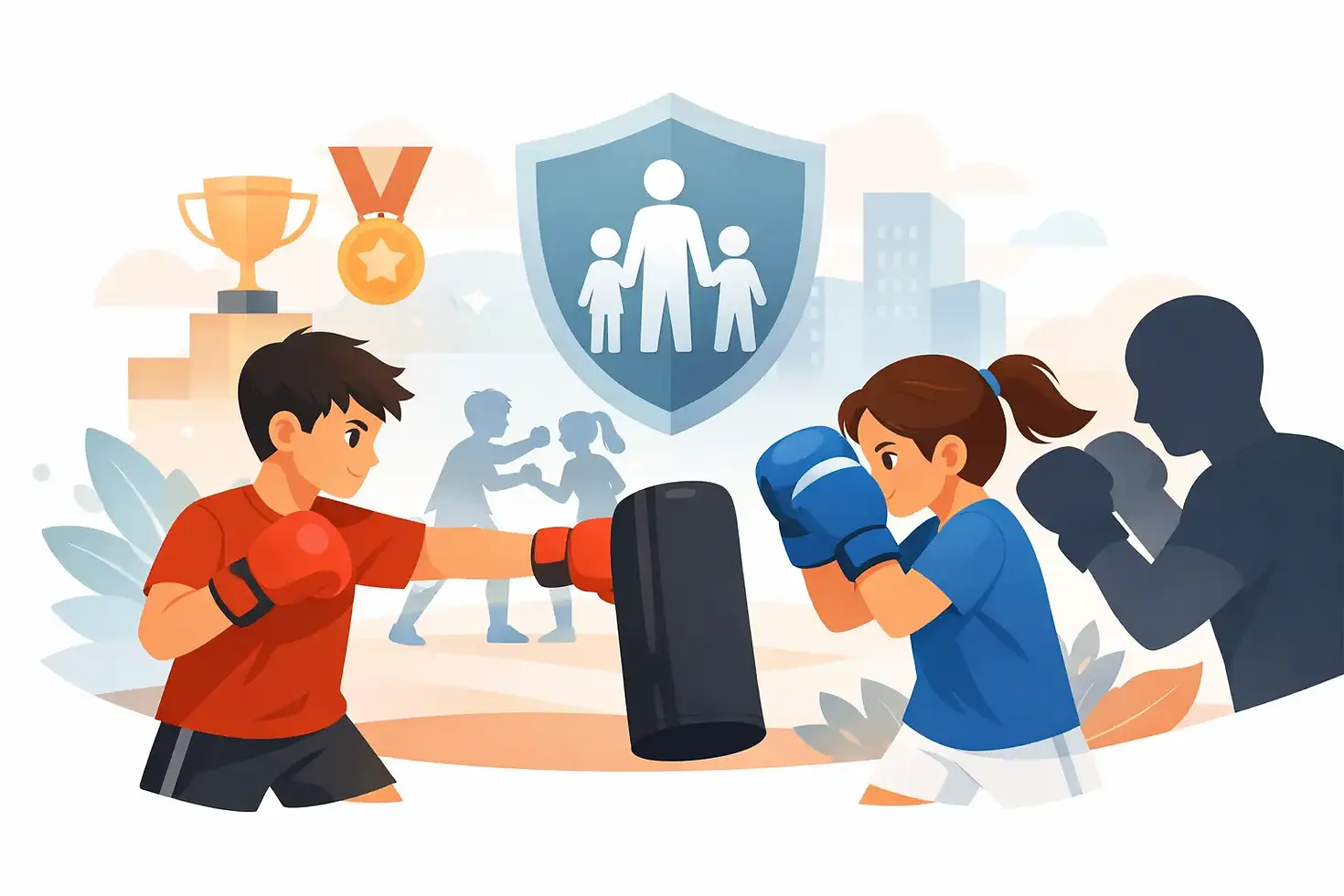
Kids Boxing and Self Defense That Builds More

A lot of parents are not looking to raise fighters. They are looking for structure, confidence, better focus, and a way for their child to stop shrinking when pressure shows up. That is where kids boxing and self defense training earns its place. Done right, it gives children practical skills, better body control, and the kind of discipline that carries into school, sports, and everyday life.
This matters even more when a child is shy, easily distracted, dealing with bullying, or full of energy with nowhere productive to put it. A good program does not just teach punches or blocks. It teaches how to listen, how to stay calm, how to move with purpose, and how to respect boundaries.
What kids boxing and self defense really teaches
Parents sometimes hear the words boxing and self-defense and assume the goal is aggression. It is the opposite. Serious instruction teaches children when not to fight, how to avoid trouble early, and how to carry themselves in a way that discourages problems before they start.
In boxing, kids learn stance, balance, timing, footwork, coordination, and control. Those are athletic skills, but they are also life skills. A child who can stay balanced under pressure often starts handling frustration better outside the gym too. They begin to understand that progress comes from repetition, not shortcuts.
Self-defense adds another layer. It teaches awareness, distance, reaction, verbal boundaries, and decision-making. For kids, that often means recognizing unsafe behavior, using their voice clearly, staying composed, and knowing when to get help from a trusted adult. Physical techniques matter, but judgment matters more.
That is why the best programs keep the training age-appropriate. A 7-year-old does not need the same instruction as a teenager. Younger children need structure, coordination work, listening drills, and simple defensive concepts. Older kids can handle more technical detail, more conditioning, and deeper conversations about conflict, discipline, and responsibility.
Why parents choose boxing over team sports sometimes
Team sports are valuable, but they do not fit every child. Some kids get lost in the crowd. Some need more direct coaching. Some are not motivated by the usual sports environment and respond better to individual skill-building with clear standards.
Boxing gives immediate feedback. A child can feel when their stance is stronger, when their hands are up, when their footwork is cleaner, and when they stayed focused through a round. That kind of measurable progress can be powerful for children who need confidence built one step at a time.
It also helps kids who struggle with attention. Good classes are structured minute by minute. Warm-up, movement, drills, bag work, partner exercises, cooldown. That routine creates consistency. Over time, many parents notice improvements in focus, patience, and effort because the child learns to follow instruction and stay engaged.
There is a trade-off, of course. Boxing is not casual if it is taught correctly. It asks for discipline. A child who wants nonstop entertainment may need time to adjust. But that is often part of the benefit. Learning to work through a challenge without quitting is one of the biggest wins a gym can offer.
Kids boxing and self defense builds confidence without false toughness
Real confidence does not come from telling kids they are strong. It comes from showing them they can do hard things. That difference matters.
When children learn proper technique, improve their conditioning, and handle drills they could not do a month earlier, they start trusting themselves. They stand straighter. They speak more clearly. They stop panicking as quickly when something feels difficult.
That is not the same as teaching a child to act tough. False toughness is loud, careless, and easy to break. Real confidence is calm. It respects rules. It does not need to prove itself every minute.
The right gym culture reinforces that. Kids should be taught that skill does not give them permission to bully, show off, or start problems. It gives them responsibility. Strong instruction always ties physical ability to self-control.
Safety depends on coaching, structure, and age-appropriate training
This is where parents should be selective. Not every youth program is built the same way. The phrase kids boxing can mean anything from fitness drills with gloves to serious technical development. Neither is automatically wrong, but the coaching has to match the child.
A strong program starts with fundamentals. Stance, guard, movement, distance, defense, and controlled drilling come before anything advanced. Coaches should be watching closely, correcting form, and making sure children understand the difference between training and rough play.
For self-defense, the emphasis should stay practical. Awareness, posture, verbal responses, escape concepts, and controlled defensive techniques are more useful for most kids than flashy moves. The goal is not to make children reckless. The goal is to make them harder to intimidate and better prepared to react appropriately.
Parents should also look for a gym that separates groups by age, maturity, and experience when needed. A beginner child should not be thrown into a room with advanced teens and expected to figure it out. Good instruction meets kids where they are and builds from there.
What a good class should look like
A quality youth class has a clear rhythm. Kids should not be standing around with no direction, and they should not be left to turn the session into chaos. Strong classes move with purpose.
The session usually starts with warm-ups that build coordination, balance, and conditioning. Then comes technical instruction, where children learn a specific skill and repeat it enough to understand it. After that, there may be bag work, partner drills, defensive movement, and basic conditioning to finish.
Just as important, coaches should expect respect. Kids should know when to listen, when to move, and how to train with control. Discipline in the room translates into safety and progress.
At Cooper's Gym, that kind of structured, serious instruction is what makes youth training worthwhile. Kids do better when expectations are clear and coaching is consistent.
The benefits go beyond the gym floor
Parents often sign up for one reason and stay for another. Maybe they come in for fitness and realize their child is becoming more confident. Maybe they come in for self-defense and notice better behavior at home. Maybe they just want an activity and end up finding a real source of discipline and direction.
Kids boxing and self defense can support better physical health, but the mental side is just as important. Children learn how to take correction without falling apart. They learn how to keep working when something feels awkward at first. They learn that respect is not weakness and that control is part of strength.
For some children, especially those dealing with bullying or low self-esteem, that shift can be major. Training does not erase every problem. It does give kids a place to build themselves up honestly, with effort and support.
It also gives families an alternative to too much screen time and too little movement. In a serious class, kids are active, engaged, and working toward something real. That has value whether a child wants to compete one day or never compete at all.
Is boxing right for every child?
Not always, and that is fine. Some children respond better to other martial arts styles. Some need more time before they are ready for the structure of boxing. Some are interested in self-defense but not in striking as a sport.
That is why the best training centers offer level-specific instruction and a clear path instead of forcing every student into the same mold. A child may start in basic fitness and self-defense work, then grow into boxing later. Another may love boxing right away but have no interest in competition. Both paths are valid.
What matters is the fit. The program should challenge the child without overwhelming them. It should build them up without making unrealistic promises. And it should be taught by people who understand that working with kids takes more than fight knowledge. It takes patience, standards, and real coaching.
If you are considering training for your child, look past hype. Watch how the class is run. Watch whether the coaches command respect without chaos. Watch whether kids are learning discipline, movement, and awareness instead of just burning energy.
The right program can do a lot more than fill an hour after school. It can give a child stronger habits, better focus, and a steadier sense of self that shows up long after class ends.


Comments